
Appendix Pain vs Gas Pain - How to Tell the Difference
Understanding the key differences between appendicitis and common digestive discomfort can help you know when to seek immediate medical attention.

Dr. Rashmi Thakkar
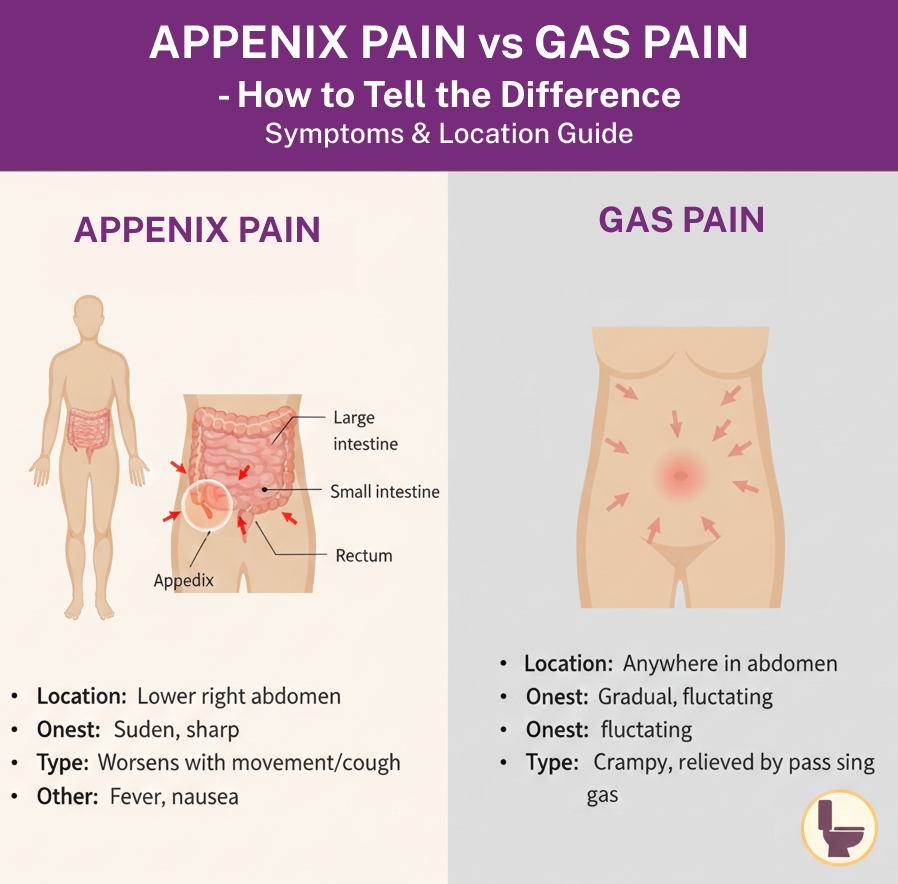
Abdominal pain is one of the most common reasons people visit the doctor. While gas pain and bloating are usually harmless, appendicitis is a medical emergency. Knowing how to differentiate between the two can be crucial for your health. This guide helps you understand the key differences so you can act quickly if needed.
Quick Comparison Guide
| Characteristic | Appendicitis Pain | Gas Pain |
|---|---|---|
| Location | Starts near navel, moves to lower right abdomen | Can occur anywhere in the abdomen, often shifts |
| Pain Type | Sharp, constant, worsening | Crampy, comes and goes, intermittent |
| Duration | Continuous, gets worse over 12-24 hours | Usually resolves within a few hours |
| Movement Effect | Worse with movement, coughing, walking | May improve with movement or passing gas |
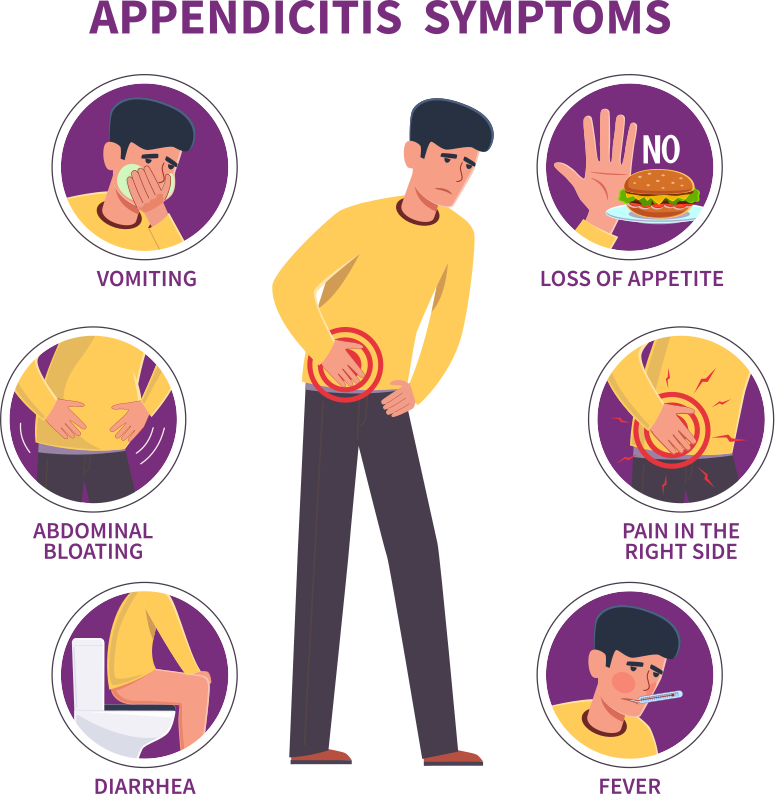
| Other Symptoms | Fever, nausea, vomiting, loss of appetite | Bloating, burping, flatulence |
| Relief | No relief from home remedies | Often relieved by passing gas or bowel movement |
Understanding the Differences
Consult a doctor if pain persists or worsens
Signs It's Appendicitis
- Pain starts near belly button, then moves to lower right
- Pain is constant and gets progressively worse
- Pain worsens when you move, walk, or cough
- Accompanied by fever, nausea, or vomiting
- Pressing on the area and releasing causes sharp pain
- Pain doesn't improve with antacids or passing gas
Signs It's Gas Pain
- Pain moves around the abdomen
- Crampy or colicky sensation that comes and goes
- Bloating and visible abdominal distension
- Relief after burping or passing gas
- Associated with eating certain foods
- Improves with movement or walking
Simple Self-Assessment (Not a Diagnosis)
The Location Test
Appendicitis pain typically settles in a specific area called McBurney's point -- located one-third of the distance from your right hip bone to your navel.
Note: This is not a substitute for professional medical evaluation. If you suspect appendicitis, seek medical attention immediately.
When in Doubt, Get Checked Out
If your abdominal pain is severe, persistent, or accompanied by fever, do not wait to see if it improves. It's always better to be evaluated and rule out appendicitis than to risk a ruptured appendix.
Common Causes of Gas Pain
- Eating too quickly
- Carbonated beverages
- High-fiber foods (beans, lentils)
- Dairy products (if lactose intolerant)
- Artificial sweeteners
- Swallowing air while eating
- Certain vegetables (broccoli, cabbage)
- Stress and anxiety
Written by
Dr. Rashmi Thakkar
Dr. Rashmi M Thakkar is a distinguished general surgeon at Jalaram Hospital with extensive experience in laparoscopic and minimally invasive surgical procedures.
Related Posts

Unsure About Your Symptoms?
Don't take chances with abdominal pain. Our experienced medical team can quickly diagnose and treat your condition. 24/7 emergency care available.