Understanding Endoscopy
What is Endoscopy?
A minimally invasive diagnostic procedure
Uses a thin, flexible tube with a camera (endoscope)
Helps doctors view the digestive tract clearly and accurately
Provides real-time visualization for accurate diagnosis
Why is Endoscopy Performed?
Early detection of GI problems before they become serious
Accurate diagnosis without the need for major surgery
Helps guide the right treatment decisions for your condition
Enables tissue sampling (biopsy) when needed for further testing
Our experienced team uses the latest endoscopy equipment to ensure your comfort and safety throughout the procedure. We understand that medical procedures can be stressful, and we're here to support you every step of the way.
Types of Endoscopy Available
Procedure type is selected based on symptoms and doctor evaluation
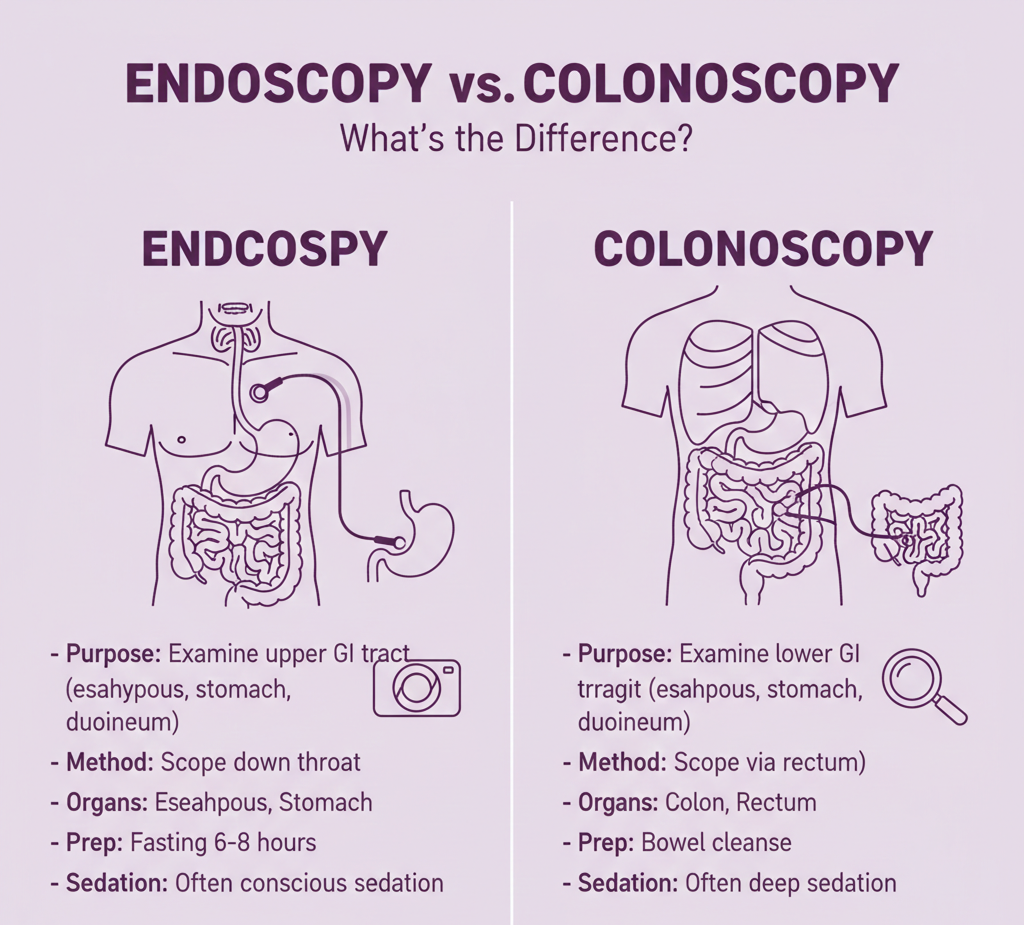
Upper GI Endoscopy
Examines esophagus, stomach, and upper small intestine
Colonoscopy
Views entire colon and lower digestive tract
Sigmoidoscopy
Examines lower portion of the colon
Diagnostic Endoscopy
Identifies abnormalities and GI conditions
Biopsy (if required)
Tissue sampling for laboratory analysis
Therapeutic Endoscopy
Treats conditions during the procedure
Conditions Diagnosed Using Endoscopy
Early diagnosis helps prevent complications and guides effective treatment
Acid Reflux (GERD)
Chronic heartburn and esophageal inflammation
Gastritis and Ulcers
Stomach lining inflammation and painful sores
Chronic Abdominal Pain
Persistent stomach or digestive discomfort
Bleeding in Digestive Tract
Internal bleeding requiring immediate diagnosis
Polyps or Growths
Abnormal tissue growths that may require removal
Inflammatory Bowel Disease (IBD)
Crohn's disease and ulcerative colitis
Difficulty Swallowing
Esophageal narrowing or blockages
Unexplained Weight Loss
Identifying underlying digestive causes
Early detection through endoscopy can prevent serious complications and lead to better health outcomes.