
Endoscopy vs Colonoscopy -- What's the Difference?
Understand the differences between various endoscopy procedures and which one is right for your digestive health needs.

Dr. Rashmi Thakkar
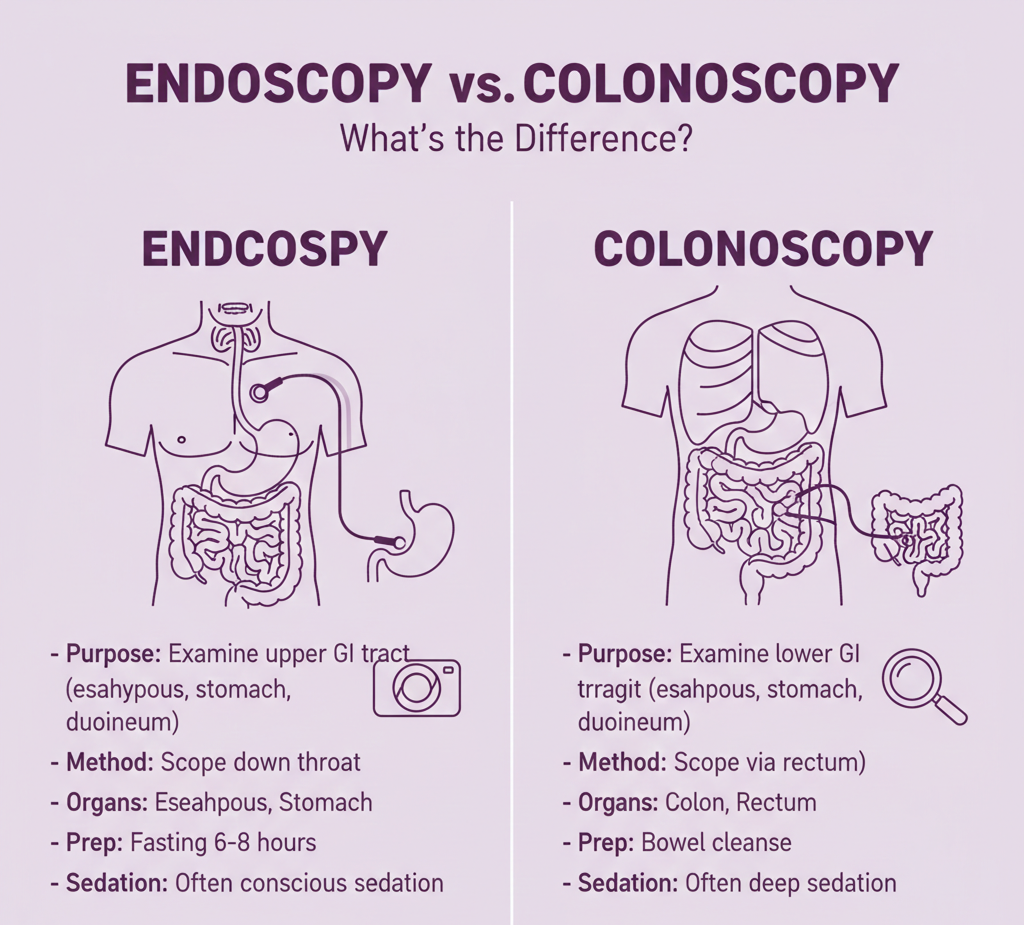
Both endoscopy and colonoscopy are valuable diagnostic tools that allow doctors to examine different parts of your digestive system. While they share similar techniques, they serve different purposes and examine different areas. Understanding these differences will help you prepare for your procedure and know what to expect.
Overview of Both Procedures
Upper GI Endoscopy
Also called EGD (Esophagogastroduodenoscopy)
Colonoscopy
Lower GI examination procedure
Detailed Comparison
| Feature | Upper GI Endoscopy | Colonoscopy |
|---|---|---|
| Purpose | Diagnose upper digestive issues like GERD, ulcers, gastritis | Screen for colon cancer, detect polyps, diagnose IBD |
| Conditions Detected | Acid reflux, ulcers, Barrett's esophagus, celiac disease | Colon cancer, polyps, colitis, diverticulosis |
| Symptoms Investigated | Heartburn, difficulty swallowing, nausea, upper abdominal pain | Rectal bleeding, changes in bowel habits, lower abdominal pain |
| Sedation | Mild sedation (throat spray or IV) | Moderate sedation (IV) |
| Recovery Time | 30-60 minutes | 1-2 hours |
| Biopsy Possible | Yes | Yes (polyp removal too) |
When is Each Procedure Recommended?
Upper GI Endoscopy is Recommended For:
- Persistent heartburn or acid reflux
- Difficulty or pain when swallowing
- Unexplained nausea or vomiting
- Upper abdominal pain
- Anemia (to check for bleeding)
- Monitoring Barrett's esophagus
- Evaluating gastric ulcers
Colonoscopy is Recommended For:
- Colon cancer screening (age 45+)
- Blood in stool or rectal bleeding
- Chronic diarrhea or constipation
- Unexplained weight loss
- Family history of colon cancer
- Previous polyps (follow-up)
- Inflammatory bowel disease monitoring
Other Types of Endoscopic Procedures
Sigmoidoscopy
Examines only the lower part of the colon (sigmoid colon)
Duration: 10-15 min
Capsule Endoscopy
Swallowable camera captures images of the small intestine
Duration: 8 hours
ERCP
Examines bile ducts and pancreatic duct
Duration: 30-60 min
Which Procedure Do You Need?
The right procedure depends on your symptoms and what area of the digestive tract needs to be examined. Your doctor will recommend the most appropriate option based on:
Written by
Dr. Rashmi Thakkar
Dr. Rashmi M Thakkar is a distinguished general surgeon at Jalaram Hospital with extensive experience in endoscopic procedures and gastrointestinal diagnostics.
Related Posts
Need Help Deciding?
Our experienced GI specialists will evaluate your symptoms and recommend the most appropriate diagnostic procedure for your condition.