
Diet & Nutrition After Bariatric Surgery
Nutrition is the cornerstone of success after bariatric surgery. This guide covers the dietary stages, essential nutrients, and long-term eating habits for optimal recovery and lasting weight loss.

Dr. Rashmi Thakkar
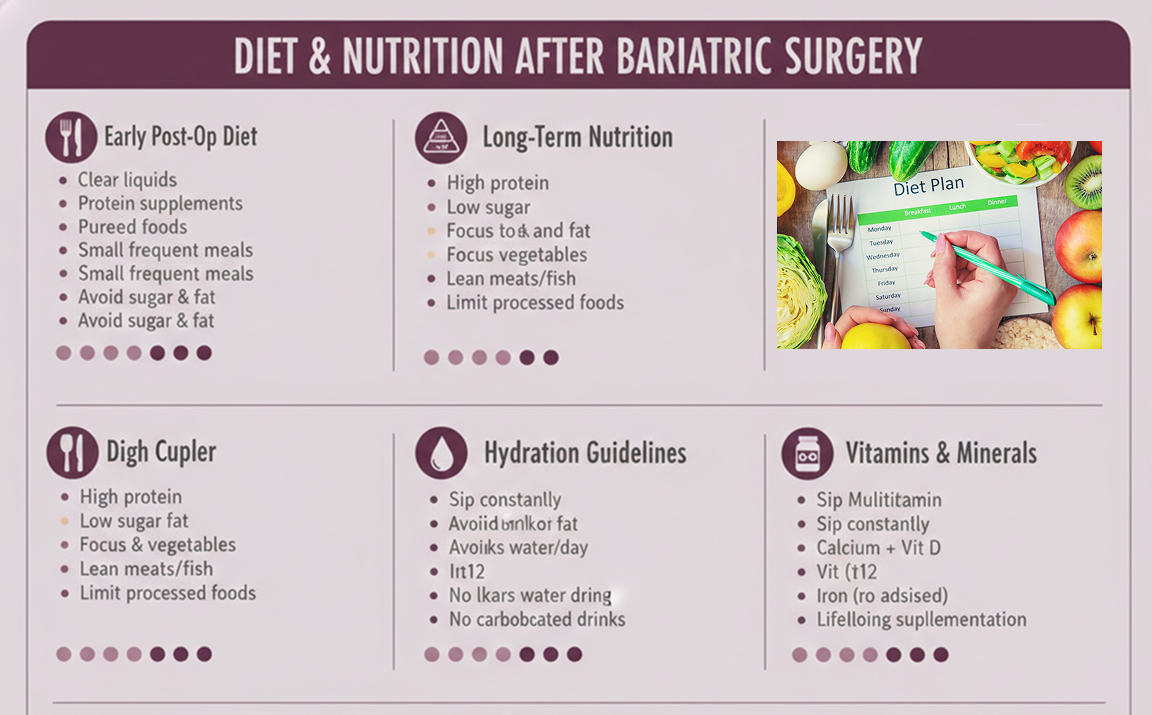
After bariatric surgery, your stomach is significantly smaller and your body absorbs nutrients differently. Following a structured diet plan is essential to heal properly, get adequate nutrition, and achieve your weight loss goals. Our nutritional team at Jalaram Hospital creates personalised plans for every patient.
Post-Surgery Diet Stages
Clear Liquids Only
- Water, clear broth, sugar-free drinks
- Sip slowly -- no more than 30 ml at a time
- Aim for at least 1.5 litres of fluid daily
- Avoid straws, carbonated drinks, and caffeine
Full Liquids
- Protein shakes and smoothies (no sugar added)
- Thin dal water, buttermilk, and strained soups
- Low-fat milk and yoghurt drinks
- Focus on getting 60-80g protein daily from liquids
Pureed & Soft Foods
- Blended dal, soft paneer, mashed vegetables
- Scrambled eggs, soft tofu, mashed banana
- Smooth dahi (yoghurt) and soft khichdi
- Eat protein first at every meal
Soft Solid Foods
- Soft-cooked chicken, fish, and eggs
- Well-cooked vegetables and soft fruits
- Soft rotis, rice in small quantities
- Introduce one new food at a time to check tolerance
Regular Balanced Diet
- High-protein, low-carb, moderate-fat meals
- Eat 5-6 small meals daily instead of 3 large ones
- Chew each bite 20-30 times before swallowing
- Stop eating as soon as you feel satisfied
Essential Vitamins & Supplements
Lifelong Supplementation Required
After bariatric surgery, your body absorbs fewer nutrients from food. Daily supplements are essential to prevent deficiencies:
Multivitamin (bariatric-specific formula)
Vitamin B12 (sublingual or injection)
Calcium citrate with Vitamin D
Iron supplement (especially for women)
Vitamin B-complex
Omega-3 fatty acids
Foods & Habits to Avoid
Strictly Avoid
Sugary foods and sweets (can cause dumping syndrome)
Carbonated and fizzy drinks
Alcohol (absorbed faster after surgery)
Bread, pasta, and starchy foods in excess
Fried and greasy foods
Eating and drinking at the same time
Eating too fast without proper chewing
Skipping meals or protein supplements
Protein-First Eating Rule
Why Protein is Essential After Surgery
- Preserves muscle mass during rapid weight loss
- Promotes wound healing and tissue repair
- Keeps you feeling full and satisfied longer
- Supports healthy hair, skin, and nails
- Target: 60-80 grams of protein daily (as advised by your nutritionist)
Good protein sources: eggs, paneer, dal, chicken, fish, Greek yoghurt, tofu, and protein shakes.
Hydration Guidelines
- Drink at least 1.5-2 litres of water daily
- Sip water slowly throughout the day -- avoid gulping
- Do not drink 30 minutes before or after meals
- Avoid sugary drinks, sodas, and packaged juices
- Carry a water bottle with you at all times
Contact Your Doctor If You Experience
- Persistent nausea or vomiting after eating
- Inability to keep any food or liquids down
- Signs of dehydration (dark urine, dizziness, dry mouth)
- Dumping syndrome symptoms (sweating, cramping, diarrhoea after eating sweets)
- Severe fatigue or weakness
Written by
Dr. Rashmi Thakkar
Dr. Rashmi M Thakkar is a distinguished general surgeon at Jalaram Hospital with extensive experience in laparoscopic and minimally invasive surgical procedures including bariatric surgery.
Related Posts


Get a Personalised Nutrition Plan
Our nutritionists at Jalaram Hospital create customised diet plans tailored to your surgery type, preferences, and health goals.